
Beyond Flounder and Shrimp: The Hidden Gems of the NC Coast
Some of the best-tasting fish caught off North Carolina never show up on a chain grocery counter. Triggerfish, hog snapper, grunt, pink snapper, and a handful of other bottom fish come in as bycatch or small, irregular landings, so they appear for a day or two and then vanish. When they do land, a local fish market is where you will find them.
Earp’s Seafood Market has been that market for Raleigh since the late 1960s. The family-run shop at the corner of South Saunders Street and Maywood Avenue, under its blue roof and seascape mural, is best known for flounder, shrimp, and croaker. Regulars also know to ask what came in from the coast this week, because the answer is sometimes a fish most people have never tried.
This guide covers what each of these fish is, where it lives, how it tastes, and how to cook it, so you know what to grab when you see it on the board.
NC Coast Fish Worth Trying
Gray Triggerfish
Gray triggerfish are the fish locals mean when they say “trigger.” Coastal anglers also call them taly, leatherjacket, or leatherneck. The name comes from the dorsal spine, which locks upright until a smaller second spine is pressed down to “trigger” its release. According to the NC Division of Marine Fisheries, they live around wrecks, rock ledges, and reefs in 80 to 300 feet of water and can reach 30 inches and 13 pounds.
Triggerfish crush crabs, clams, and urchins with incisor-like teeth, and that shellfish diet shows on the plate. The meat is bright white, firm, and sweet, often compared to grouper or even crab. Their skin is tough, almost like sandpaper, so most cooks buy them as fillets. The yield is low, which is one reason triggerfish fillets cost more than you might expect from such an odd-looking fish.
Best ways to cook: pan-seared in butter, blackened, grilled on a plank, or cut into fish tacos.
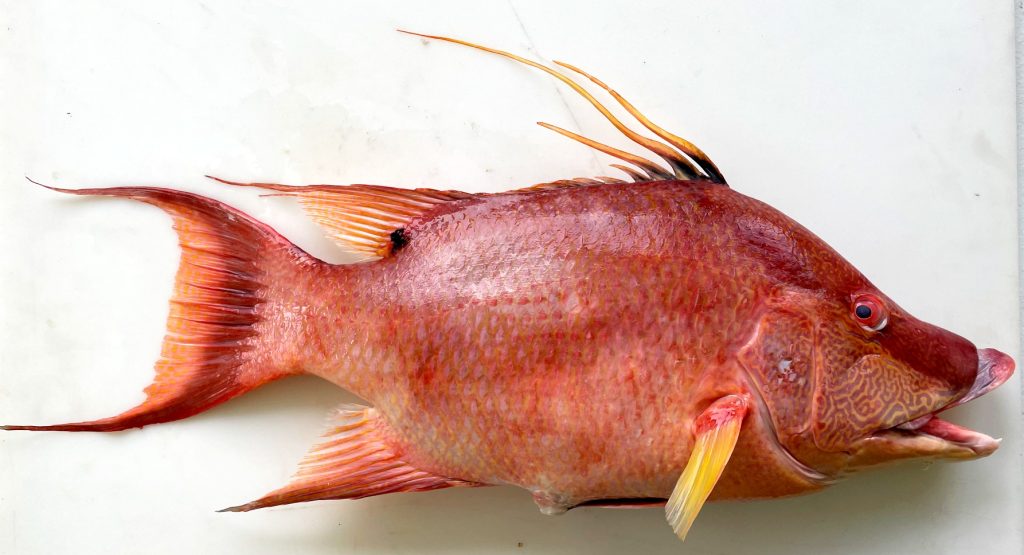
Hog Snapper (Hogfish)
Despite the name, hog snapper is not a snapper. It is a hogfish (Lachnolaimus maximus), the largest member of the wrasse family in the western Atlantic. It gets its name from a long, pig-like snout that it uses to root through sand for crabs, clams, and snails. Like many reef fish, hogfish start life as females and later change to males.
Hogfish rarely bite a baited hook, so most are taken by spearfishermen, which keeps supply small and prices high. Chefs in Florida and the Carolinas rank it among the best-eating fish in the Atlantic. The fillets are snow white with a delicate, sweet flavor and a fine flake, closer to flounder or scallops than to a strong reef fish.
Best ways to cook: a quick sauté with lemon and capers, lightly fried, or broiled with butter. Keep the seasoning simple.
White Grunt
The white grunt makes an audible grunting sound when it is pulled from the water, which is how the grunt family got its name. NC fishermen also call it common grunt, redmouth, or “ruby red lips” for the bright red lining of its mouth. The NCDMF species profile lists a maximum of 25 inches and 8 pounds, though most run about 15 inches and 1.5 pounds.
Grunts are mostly caught by accident by boats fishing for porgy, triggerfish, grouper, and snapper, so they come to market in small, irregular batches. The meat is white, mild, and slightly sweet with a medium flake. Grunts are a Southern classic: in Key West, “grits and grunts” was once a staple breakfast.
Best ways to cook: fried whole or as fillets, pan-fried with cornmeal, or baked whole with herbs.
Pink Snapper (Red Porgy)
On the NC coast, “pink snapper” usually means red porgy (Pagrus pagrus), also called pinky, pink porgy, or silver snapper. It is a true porgy, not a snapper. The fish is reddish-pink on top and silvery below with rows of small blue spots. Off North Carolina, the average red porgy runs about 16.5 inches and 2.25 pounds and lives on rough bottom 90 to 350 feet deep.
Red porgy are heavily regulated after past overfishing, so they appear only now and then. The flesh is white, moist, and mild with a light sweetness from a diet of crabs, snails, and urchins. A whole pink snapper is the right size to roast for two people.
Best ways to cook: roasted whole, grilled whole, or pan-seared fillets with the skin on.
Other NC Catches to Watch For
- Vermilion snapper (beeliner): A true snapper that is smaller and slimmer than red snapper, found from Cape Hatteras south in 80 to 350 feet of water (NCDMF). Sweet, delicate, and great roasted whole.
- Sheepshead: Known for its black “convict” stripes and human-like teeth, which it uses to crunch barnacles and crabs around NC piers and jetties. Sweet, white meat that rewards the work of cleaning it.
- Blueline tilefish: A deepwater fish from the edge of the continental shelf. Its firm, sweet flesh is often compared to lobster or crab, and it holds up well in chowders and on the grill.
- Black sea bass: A familiar NC bottom fish that is still hard to find inland. Clean, delicate, and a favorite for steaming or frying whole.
NC Fish You Should Try at a Glance
| Fish | Also Called | Flavor | Texture | Typical Size Off NC | Best Cooking Methods |
| Gray triggerfish | Taly, leatherjacket | Sweet, crab-like | Firm, white | Up to 30 in, 13 lb | Pan-sear, blacken, grill, tacos |
| Hog snapper | Hogfish | Very mild, sweet | Delicate, fine flake | Varies; spear-caught | Sauté, light fry, broil |
| White grunt | Redmouth, ruby red lips | Mild, slightly sweet | Medium flake | About 15 in, 1.5 lb | Fry, pan-fry, bake whole |
| Pink snapper | Red porgy, pinky | Mild, lightly sweet | Moist, medium flake | About 16.5 in, 2.25 lb | Roast or grill whole, pan-sear |
| Vermilion snapper | Beeliner | Sweet, delicate | Tender, flaky | Up to 25 in, 6 lb | Roast whole, grill, bake |
| Sheepshead | Convict fish | Sweet, shellfish-like | Firm, white | Commonly 2–5 lb | Fry, broil, grill |
| Blueline tilefish | Gray tilefish | Sweet, lobster-like | Firm, dense | Commonly 3–8 lb | Grill, chowder, roast |
Sizes for triggerfish, grunt, red porgy, and vermilion snapper come from NC Division of Marine Fisheries species profiles; others are typical market sizes and vary by catch.
Tips for Buying and Cooking Fish
How to Pick a Fresh Fish
- Look at the eyes: A whole fish should have clear, bright eyes, not cloudy or sunken ones.
- Check the gills: They should be bright red or pink, not brown or gray.
- Press the flesh: Fresh fillets spring back when touched and smell like clean ocean water, not “fishy.”
- Ask what came in today: Uncommon species often arrive in small lots and sell out fast, so ask the counter before you settle on your usual order.
Cooking Tips
- Keep it simple: Mild, sweet fish like hogfish and pink snapper need little more than butter, salt, and lemon.
- Cook whole when you can: Small fish like grunt, porgy, and beeliner stay moister on the bone and are easier to judge for doneness.
- Ask for cleaning: Triggerfish and sheepshead have tough skin and sharp spines, so let the market fillet them for you.
- Watch the clock: Most of these fish cook through in 8 to 10 minutes per inch of thickness. Pull them as soon as the flesh turns opaque and flakes.
Frequently Asked Questions
Does Earp’s Seafood Market always carry triggerfish and hog snapper?
No. These fish come in small, irregular landings from the NC coast and sell quickly when they arrive. Call ahead or ask at the counter what came in that week.
What does triggerfish taste like?
Triggerfish has firm, bright white meat with a sweet flavor often compared to grouper or crab. Its shellfish diet gives it that sweetness.
Is hog snapper the same as red snapper?
No. Hog snapper is a hogfish, a member of the wrasse family. Its meat is milder and more delicate than red snapper, and many cooks consider it one of the best-tasting fish in the Atlantic.
What is pink snapper in North Carolina?
On the NC coast, pink snapper usually means red porgy, also called pinky. It is a porgy, not a true snapper, with mild, moist white meat.
Are grunts good to eat?
Yes. White grunt has mild, slightly sweet white meat and is a traditional Southern fried fish. It is best cooked whole or as small fillets.
Why are these fish harder to find than flounder or grouper?
Most are caught incidentally by boats fishing for other reef species, and several, like red porgy, are closely regulated. Small catches rarely reach chain grocery stores, so local fish markets get them first.
Find Fresh NC Fish at Earp’s Seafood Market
The best fish on the North Carolina coast are often the ones you have never heard of. Triggerfish, hog snapper, grunt, and pink snapper reward anyone willing to try something new, but they come and go with the boats. Earp’s Seafood Market has served Raleigh from its landmark spot on South Saunders Street for more than five decades, and its staff can tell you what came in fresh, how to cook it, and which fish to grab before it sells out. Stop by or call ahead 919-833-3158 to ask what is on ice this week.
Availability of these species varies by season, weather, and fishing regulations. Check with Earp’s for current selection.
Sources
- Gray Triggerfish species profile, NC Division of Marine Fisheries
- White Grunt species profile, NC Division of Marine Fisheries
- Red Porgy species profile, NC Division of Marine Fisheries
- Vermilion Snapper species profile, NC Division of Marine Fisheries
- Hogfish species page, NC Division of Marine Fisheries
- Red porgy called pink snapper, Carolina Sportsman
- Earp’s keeps it in the family, WALTER Magazine